
Hard House Coffee
Editorial publication · research-based guidance
Editorial note: Hard House Coffee separates researched guidance from hands-on testing. Product links may be affiliate links at no additional cost to you. See our research and recommendation methodology and disclosure.
A dependable starting recipe
Pour-over is not difficult because it has many steps; it is difficult when the dose, grind, water, and timing change together. Start with 20 grams of coffee and 300 grams of water, a 1:15 ratio. Use a medium-fine grind, water around 93°C / 200°F, and aim for a total brew time of roughly 2:45 to 3:30. Those are starting points, not laws.
A V60, Kalita Wave, or similar dripper can all make a good cup. The shape and filter change the flow, so keep the recipe stable while you learn your particular brewer.
What you need
Coffee and grinder
Dripper and filter
Scale and kettle
The four pouring stages
- Add 20 grams of coffee, settle the bed, and make a small well in the center. Start the timer as water first touches the grounds.
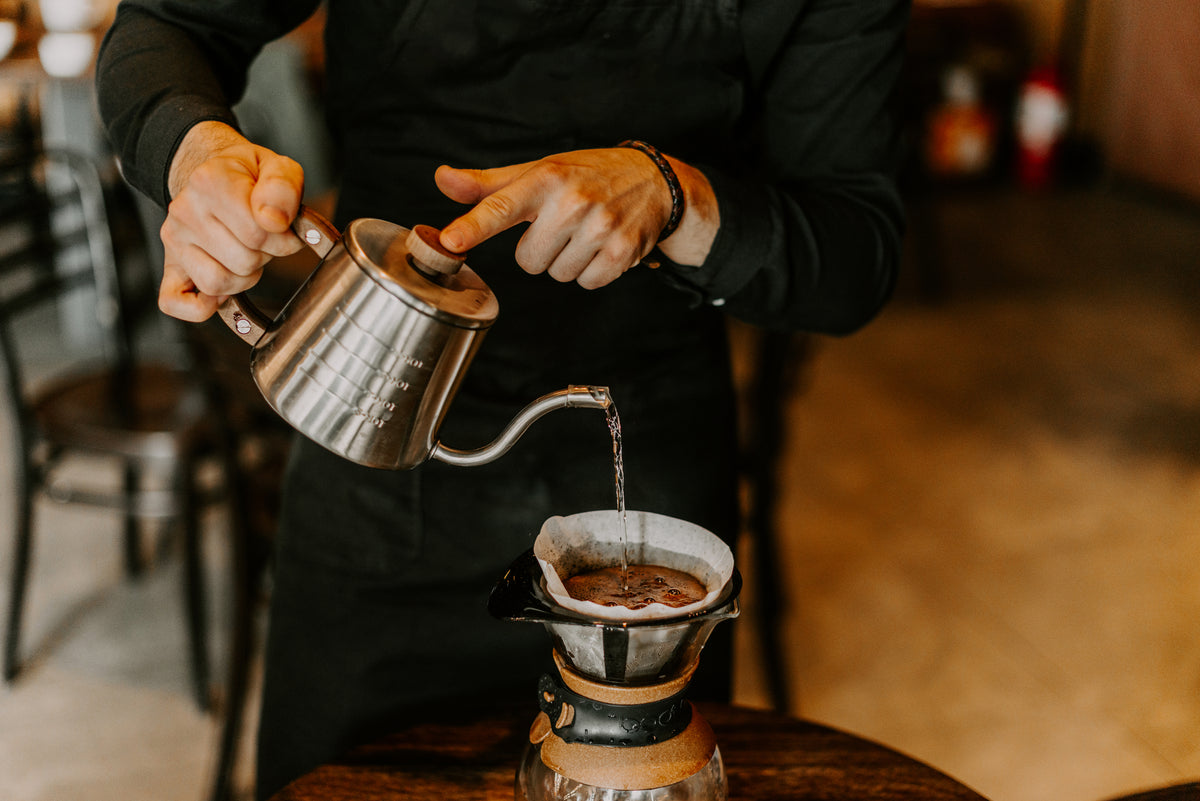
- Bloom with about 50 to 60 grams of water. Swirl gently so all grounds are wet, then wait 30 to 45 seconds. Fresh coffee may need more time to release gas.
- Pour in controlled pulses until you reach 200 grams, keeping the water level steady rather than flooding the filter. Pour in small circles and avoid the paper walls.
- Finish to 300 grams, then let the bed drain. A flat bed is a useful visual clue, but taste and repeatability matter more than appearance.
Adjust by taste
Sour, sharp, or thin
Bitter, dry, or hollow
Weak but clean
Clogged and slow
Light roast versus dark roast
Light roasts often benefit from hotter water, a finer grind, and enough contact time to extract their denser structure. They can show fruit, florals, or acidity when the recipe is working, but those flavors should not be confused with sourness.
Darker roasts generally extract more readily. Start a little cooler or coarser if the cup tastes roasty or dry, and consider a slightly lower ratio if you prefer more body. Roast level is only one variable; origin, processing, age, and water chemistry all play a role.
How to improve without buying more gear
Keep a short brew log: coffee, dose, water, grind setting, total time, and one sentence about taste. Rinse the filter, use fresh water, and preheat the brewer. If you change beans, expect to adjust the grind. If you change the grind, leave the ratio alone until you taste the result.
A good pour-over is not a performance. It is a small, repeatable system that makes the cup easier to understand.