
Compare the Turin DF54 and original Baratza Encore ESP by adjustment, single dosing, switching brew methods, cleaning, and daily workflow.
Compare the right versions
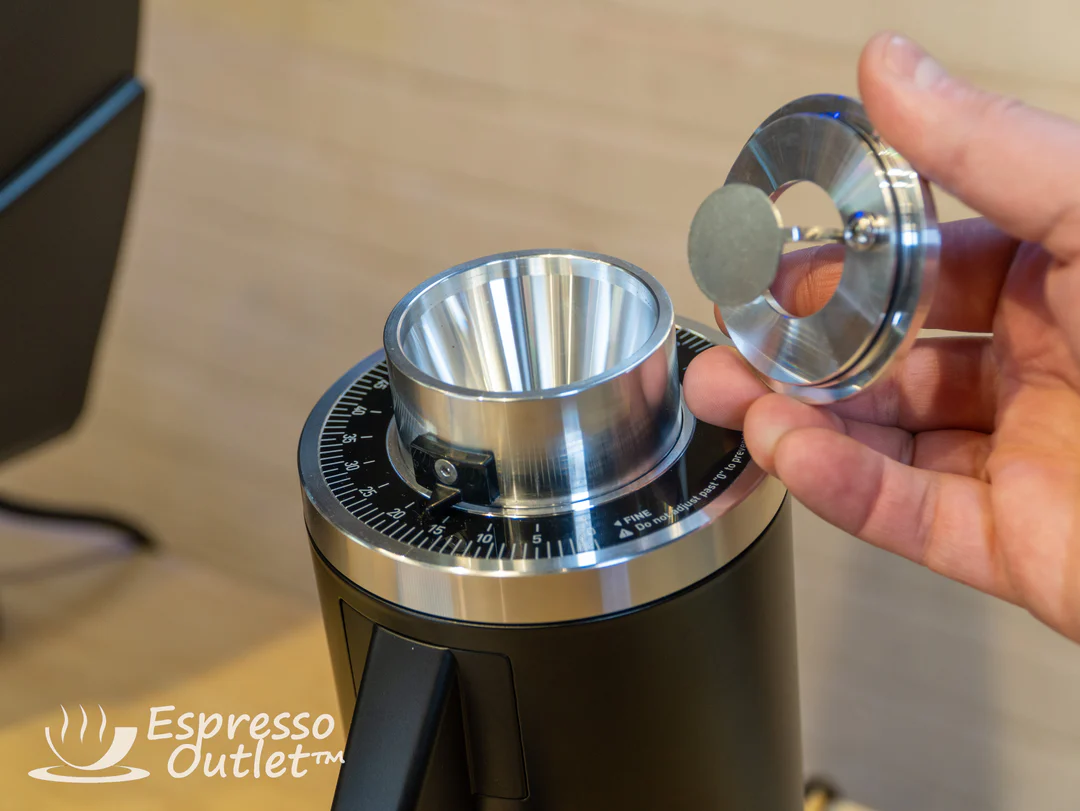
Turin’s current listing identifies a DF54 v4.1 with 54 mm flat burrs, stepless adjustment and revised chute and declumper details. The photograph here shows the DF54 family rather than documenting every current revision. Check the version included in the listing you are comparing.
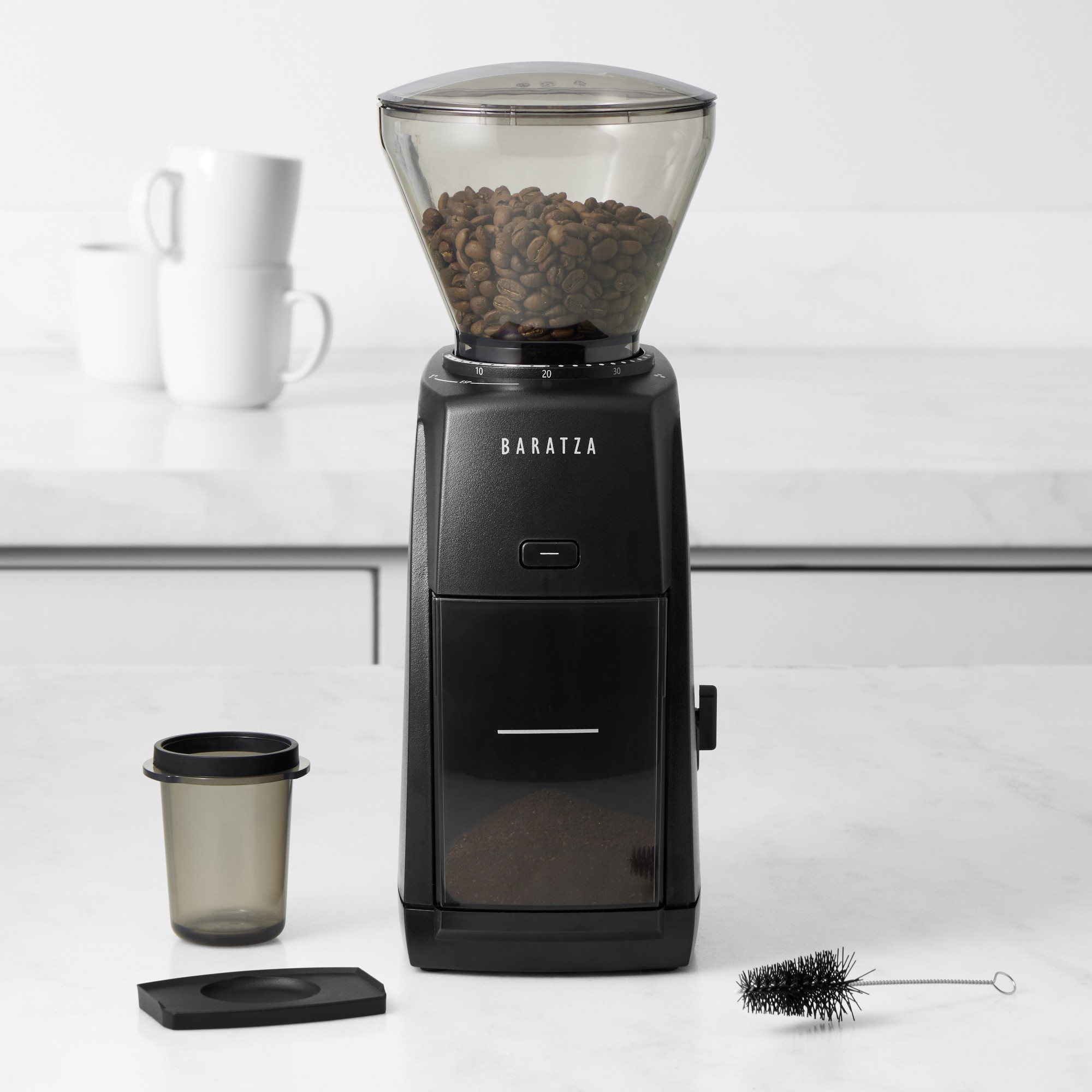
On the other side is the original Encore ESP, whose manual divides 40 settings into an espresso range, 1–20, and a filter range, 21–40. It is different from an ordinary Encore, so look for the full model name and check local support rather than relying on the Encore name alone.
The practical difference between stepped and stepless
Stepped adjustment gives you repeatable reference positions. If your recipe works at a particular number, returning there is straightforward. The compromise is that one step may move the extraction farther than you wanted. You can sometimes compensate with dose or beverage yield, but those changes also change the recipe.
A stepless collar lets you move between those positions. That helps when a small grind change matters, but returning precisely to a previous setting requires your own reference. Neither system eliminates the need to taste, and dial numbers cannot be compared between different grinders.
| Daily habit | DF54 approach | Original Encore ESP approach |
|---|---|---|
| One bag, repeated drinks | Weigh each dose | Hopper or weighed doses |
| Fine espresso adjustment | Continuous collar movement | Fixed espresso steps |
| Switch to filter and back | Record collar positions and recheck | Record steps and recheck |
Switching coffee is not the same as switching settings
A single-dose routine can be attractive if one person drinks decaf and another drinks regular coffee. Weigh the beans, grind, and check the output. Do not infer zero retention from the presence of a bellows or an anti-static system; some coffee can remain in a grinder, and the amount depends on conditions and technique.
If you switch between espresso and pour-over, mark your references and expect to verify the next dose. Coffee left inside can mix with the next batch. Do not waste an arbitrary quantity on a universal purge recommendation: consult the manual, inspect the output and choose a repeatable routine.
Flat versus conical is not a flavour guarantee
The DF54’s flat-burr format and the Encore ESP’s conical design are useful specifications, but they do not establish a simple clarity-versus-body rule. Burr geometry, alignment, coffee, grind setting and brewing method all affect the cup.
When reading a taste or retention comparison, look for the coffee, recipe and measurement method behind it. A claim such as “zero clumping” tells you little without that context. Use the documented adjustment system and maintenance procedure to judge fit, then treat taste comparisons as evidence from a particular setup.
Maintenance can decide which one stays pleasant to use
Look at how to reach the burrs and chute, which parts must remain dry and what happens to your calibration after cleaning. Unplug the grinder before the manual’s cleaning procedure; do not put water into its motor or burr chamber.
Before choosing, check who supplies replacement parts and handles a warranty claim in your country. A slightly different daily routine may be acceptable; a grinder that is difficult to service locally may not be. Avoid comparing the sticker price while ignoring those ownership questions.
Which routine would you rather repeat?
For someone learning espresso with one regular bag, clear steps can reduce indecision. For someone already weighing doses and wanting small adjustments, the DF54’s workflow is more aligned with that habit. If most of your coffee is filter coffee, first decide whether you really need an espresso-oriented grinder.
If you are undecided, walk through a normal day: your first coffee, a second drink, a possible switch to decaf and cleanup. Would weighing each dose feel satisfying or tiresome? Would numbered steps make returning to yesterday’s recipe easier? The answers help turn two specification lists into a choice you can live with.
Sources and research notes
- Turin: current DF54 specifications and revision information
- Baratza: original Encore ESP instruction manual